
THE EARLIEST SCRIPT OF SCRIPTURE
What Is Paleo-Hebrew?
Paleo-Hebrew is the ancient script in which the earliest portions of the Hebrew Scriptures were written. Predating the square Aramaic script used in most modern Hebrew texts, it reflects the linguistic and cultural world of ancient Israel and its Near Eastern context.

Before the Square Script
What many recognize today as “Hebrew” is written in a later script derived from Imperial Aramaic. Paleo-Hebrew represents the earlier alphabetic form used in inscriptions, seals, ostraca, and early biblical manuscripts.
שָׂפָה
Modern Hebrew Script
The square Aramaic script became standard in later eras and is the form used in most postexilic Hebrew manuscripts.
𐤔𐤐𐤄
Paleo-Hebrew Script
Paleo-Hebrew retains older letter shapes with pictographic echoes evident in seals, ostraca and early inscriptions.
Why Paleo-Hebrew Matters
A brief, measured explanation of why studying the earliest script contributes to accurate interpretation, historical placement, and covenantal understanding.
Linguistic Clarity
Studying the earliest script clarifies morphology and phonetics, aiding precise lexical and grammatical reading now.
Historical Grounding
This situates texts within material culture, linking inscriptions, monuments, and epigraphic records to literature.
Covenant Identity
Recovering the early script renews communal memory and covenantal reading, reinforcing theological responsibility.
From Stone to Scroll
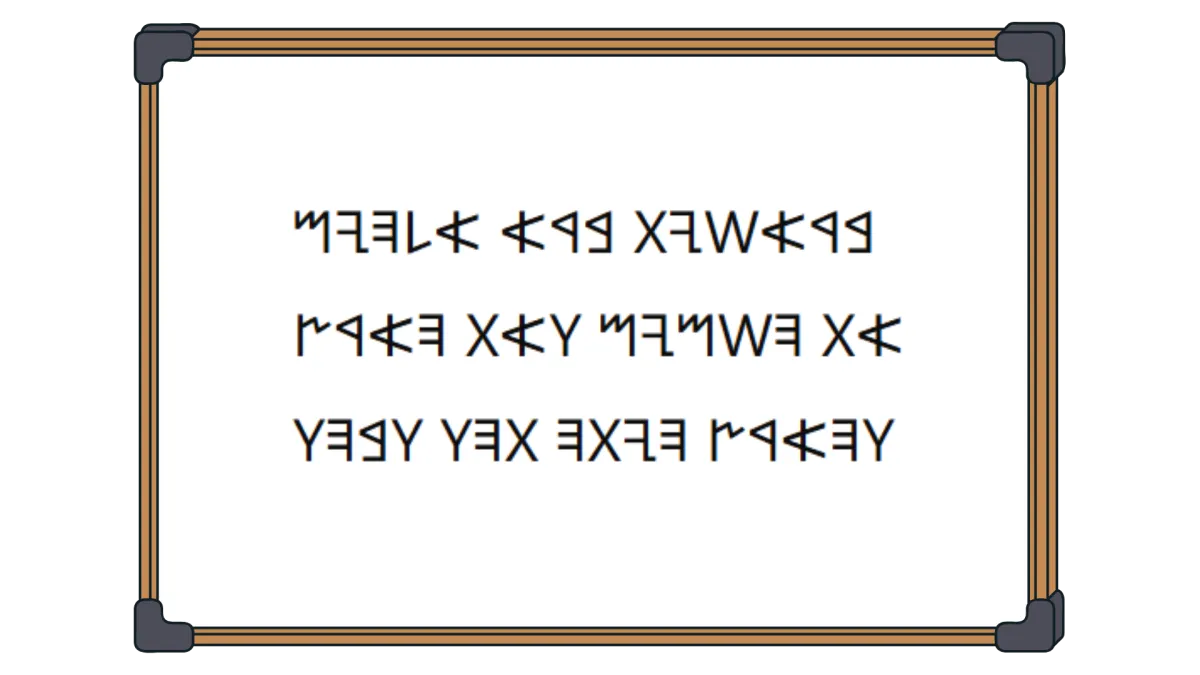
Paleo-Hebrew appears in ancient inscriptions such as seals, boundary markers, monumental engravings, and early manuscripts. These attestations demonstrate a living writing culture that coexisted with other Near Eastern scripts and practices.
Common Misconceptions
Is Paleo-Hebrew a different language than Hebrew?
No. Paleo-Hebrew is a script (the writing system). The language is an early form of Hebrew; the script represents orthography and letter-forms rather than a distinct tongue.
Is it mystical or symbolic?
Scholarly study treats letter-forms as linguistic signs and material evidence. While some traditions assign symbolic values, academic work focuses on orthography, paleography, and historical context.
Is it older than Biblical Hebrew?
Paleo-Hebrew is an earlier script form used to write ancient Hebrew; it does not denote a wholly different language. Chronology varies by inscriptional context and regional usage.
Was it replaced?
Yes: over time many communities adopted the square (Aramaic-derived) script. Replacement was gradual and regionally varied rather than a single abrupt event.
Do I need to know modern Hebrew first?
Modern Hebrew knowledge helps with vocabulary and grammatical intuition, but paleographic training and epigraphic familiarity are primary for reading inscriptions and ancient scripts.
How the Institute Approaches Paleo-Hebrew
Our research combines epigraphic rigor, comparative Semitics, and covenantal hermeneutics to support careful, historically grounded readings.
Epigraphy
We analyze inscriptions, seals, and ostraca using stratigraphic and paleographic methods to date texts and contexts.
Comparative Study
We compare Semitic inscriptions to trace alphabetic developments, borrowings, and divergent orthographic practices.
Covenant Study
We read linguistic evidence within covenantal frames, attending to communal promises and legal and ethical claims.
Begin Reading the Earliest Script
Discover courses, research publications, and tools designed to help you engage Scripture through its earliest witnesses.
Institute of Paleo-Hebrew Research & Culture
Dedicated to the study, preservation, and restoration of the original Paleo-Hebrew language and its cultural context—for the renewal of biblical understanding across generations.
© 2026 Institute of Paleo-Hebrew Research & Culture. All rights reserved.
Contact
For academic partnerships, speaking invitations, or cohort inquiries, use the form above or visit:
https://paleohebrew.org/contact